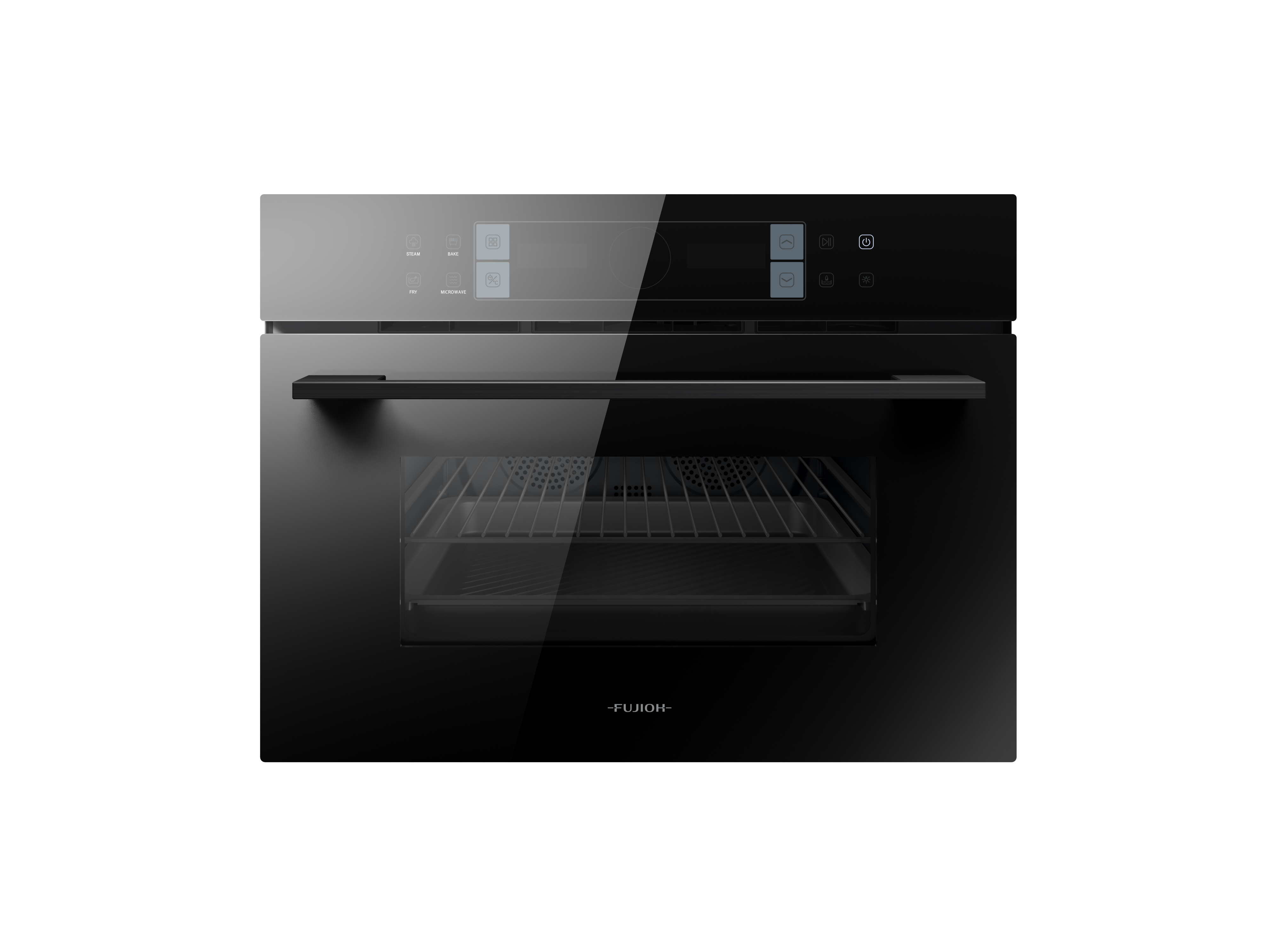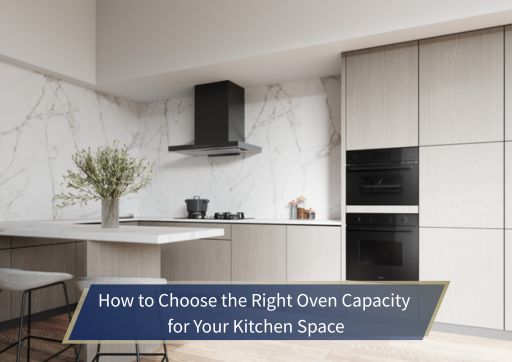
Choosing an oven isn’t just about brand names or flashing features on the display. It’s about the size that actually works for your home and lifestyle,and cooking space. Surprisingly, oven capacity matters more than most people realise. Think about it: a tiny oven might force you to cook in batches, while an oversized one might sit mostly empty, eating up energy and taking up your kitchen space.
For Malaysians asking “how to choose oven capacity Malaysia?” or “what size oven capacity to choose?”, it’s important to match the oven to your typical meals and family size. Most homes cook with LPG cylinders for the stovetop, while ovens are usually electric. This means kitchen ventilation and space planning become even more important, especially in compact apartments or terrace-house kitchens. The right oven size makes your cooking smoother, faster, and more enjoyable, whether you’re roasting a chicken for dinner or baking a tray of kueh.
This oven capacity guide will help you understand kitchen oven capacity and what size oven to choose in Malaysia, so every meal feels effortless. Before we dive into family sizes and kitchen layouts, let’s first understand why oven capacity really matters.
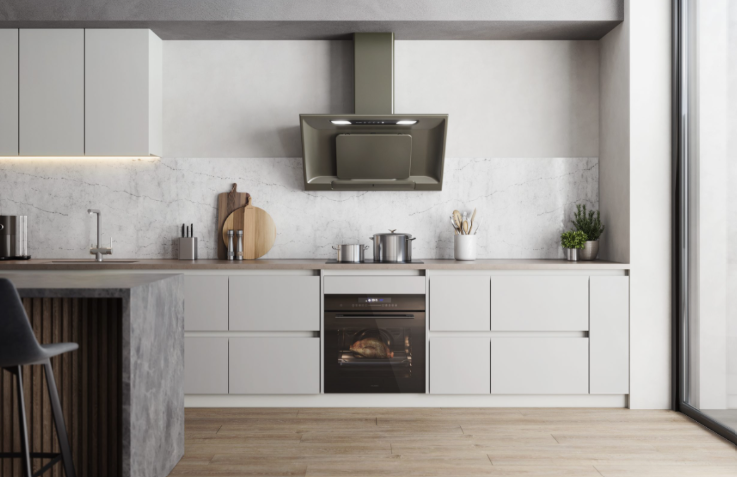
Oven capacity refers to the amount of space inside your oven where food can cook, usually measured in litres. It may seem like a simple number, but it directly affects what you can cook, how much you can cook, and even how energy-efficient your cooking is.
For example, a 30-litre oven capacity is suitable for small casseroles, reheating meals, or baking a tray of muffins. It works well for everyday cooking for one or two people, and because of its compact size, consumes less electricity while fitting neatly into smaller kitchens.
A 50 litres oven to 70 litres oven capacity are more versatile for families. They can comfortably handle daily meals such as roasting a whole chicken, baking a tray of brownies, and cooking vegetables on another shelf at the same time without worrying about uneven cooking. For those who host frequently or live in larger or multi-generational households, ovens of 70 litres and above support multi-tray cooking, making it easy to prepare multiple dishes simultaneously.
Oven capacity also plays a role in cooking quality. Overcrowding a small oven can lead to uneven heat and soggy results, while using a large oven for very small portions can lead to unnecessary electricity usage.
Knowing this, the next step is to choose capacity based on your household size.
| Family Size | Recommended Capacity | Ideal Usage |
| Single / Couple | 20–40L | Compact meals, reheating, small bakes |
| Family of 3–4 | 50–70L | Daily cooking, roasting, batch baking |
| Large Family / Entertainers | 70L+ | Multi-dish cooking, big portions, festive meals |
Choosing the right oven capacity is not just about space, it is about matching that space to your family’s needs. Think of it like choosing luggage: you wouldn’t bring a huge suitcase for a day trip, or a tiny bag for a week-long vacation.
For singles or couples, an oven between 20 to 40 litres is usually sufficient. It’s like having a cosy little cooking nook, perfect for reheating, baking a 600g cake, or roasting a few chicken breasts. You won’t feel overwhelmed by excess space, and your energy usage stays low, which is a bonus in Malaysia where electricity bills can rise when running a large oven for small portions.
A family of three to four people often needs 50 to 70 litres. You can roast a whole chicken with vegetables, bake multiple muffins, or prepare nasi ayam for a small gathering. FUJIOH ovens in this range feature dual convection fan – allowing precise heat distribution for every recipe. Achieve a perfectly crisp pizza base while melting the cheese, or bake pastries and bread evenly every time.
For big families, a 70-litre oven and above can make a world of difference. Imagine preparing a full festive spread all at once. FUJIOH designs its ovens to deliver even heat for multi-tray cooking, ensuring all dishes cook evenly and consistently, even when the oven is full.
If you frequently host open houses during festive seasons, it is wise to choose one size larger than what you think you need. It may feel oversized at first, but when family celebrations arrive, you will truly appreciate the extra space to cook more dishes simultaneously. Matching the oven to family size is not just about numbers, it is about lifestyle and practical needs.
Once selected the ideal size for your household, consider how the oven fits within your kitchen space and daily cooking routine.
Even the perfect oven won’t help if it doesn’t fit your cooking space or disrupts your kitchen design. Many Malaysian homes—apartments and condos—have compact kitchens.
A 70L oven capacity may be ideal for cooking, but if it blocks cabinet doors or overcrowds your kitchen island, it becomes inconvenient. This is where the choice between built-in and countertop ovens matters.
Built-in ovens save countertop space and keep the kitchen looking tidy. However, they require proper external ventilation to prevent heat buildup in surrounding cabinetry. Careful planning is needed during cabinet design to ensure sufficient airflow, avoiding potential overheating and maintaining safe operation. Countertop ovens are portable and easy to move, making them ideal for smaller kitchens or for creating extra space during cleaning and food preparation.
Placement is also key. Install your oven at a comfortable height—ideally around elbow level—to reduce bending or reaching over other appliances, making cooking safer and more convenient. Ensure there is sufficient space around the oven for proper airflow and easy access, so you can handle hot dishes and perform routine cleaning comfortably. For optimal kitchen workflow, place the oven near your prep and cooking areas, allowing smooth movement between chopping, cooking, and serving.
With the right placement, it not only improves safety but also enhances efficiency and convenience in your kitchen. Next, it’s important to consider how your cooking habits and lifestyle influence the oven you should get.
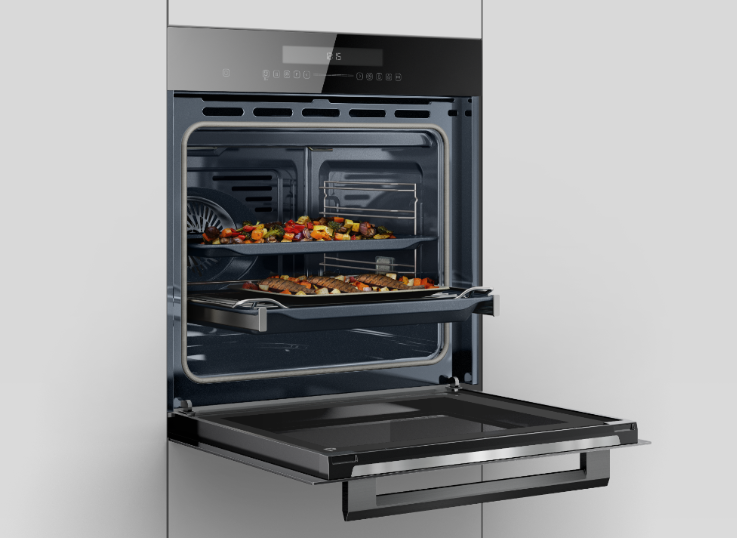
Your oven should match the way you cook.
If you bake or roast frequently- whole fish, chickens, large batches of baked goods, or multiple trays of vegetables, a larger oven provides the space needed. It ensures even cooking, prevents burnt tops or undercooked centres, and allows multi-tray cooking during festive seasons or gatherings.
For simpler meals, a compact oven is usually sufficient. It heats faster, uses less electricity, and fits more easily into small kitchens. If your typical cooking involves reheating, grilling, or preparing quick lunches, an oven between 20-40 litres is a wise choice.
It’s also important to consider energy use. Larger ovens consume more electricity, so choosing a size that aligns with your actual cooking style can help you manage energy costs.
FUJIOH designs modern ovens like the Micro-Steam-Bake InfiniOven FV-AL81 (46L), include features such as dual convection fans, auto cook menu, and dual temperature control help maintain consistent results, whether preparing a single meal or multiple trays at once, making them suitable for both heavy-duty and everyday cooking.
Once you understand your cooking style, you can more easily choose the right oven capacity and plan its placement in your kitchen space.
Choosing between a built-in oven and a freestanding one really depends on how you use your kitchen every day.
Built-in ovens blend seamlessly into cabinetry, creating a sleek, modern look. Installed at a convenient height, they make handling hot trays easier without bending or reaching, making them ideal for families who cook regularly and want a clean integrated kitchen design. If you are considering a built-in option, FUJIOH’s FV-EL61 offers steady heating with 8 versatile functions and an enamel-coated cavity for easy cleaning and maintenance, combining practicality with a clean, modern look.
Freestanding ovens, on the other hand, are portable and can be placed anywhere with a suitable power point. They’re easy to install, simple to replace, and a practical choice for renters or homes that may be renovated later.
Both types suit Malaysian kitchens well. The key is to match the oven type to your daily cooking habits, kitchen layout and long-term needs. Built-in models save countertop space and maintain a streamlined look, while freestanding ovens offer flexibility and easy replacement. Whichever style you choose, plan its placement carefully—allowing proper ventilation, convenient height, and enough clearance around the unit—to ensure safe, efficient, and comfortable cooking.
Measuring your kitchen space correctly helps to prevent installation issues later.
Start by checking the width, height, and depth of the cabinet opening where the built-in oven will be installed. Compare these measurements with the oven’s installation guide to ensure a proper fit. Most built-in ovens also require a ventilation opening at the bottom of the cabinet and a small gap at the back for heat dissipation, so make sure your cabinet design allows for this.
After that, look at the material of your cabinets. Most Malaysian kitchens use plywood or laminate cabinets which can handle heat, but proper ventilation still helps protect the cabinet over time.
Also check the position of your power socket. It should be accessible yet discreet, allowing the oven to be plugged in without stretching or bending the power cord. Ideally, the socket should be inside the cabinet or on the wall behind, depending on your kitchen layout.
Finally, ensure that the front of the cabinet has enough clearance for the oven door to open fully. This is especially important if your kitchen has an island, walkway, or nearby drawers that might block the door.
These simple checks help ensure your built-in oven fits perfectly and works efficiently once installed.After checking the space and guide, choose the oven size that fits your cooking style and family needs.
When choosing the right oven, consider your family, kitchen space, and daily cooking habits. For small homes, a 20-40 litres oven is sufficient, while a family of four will benefit from 50-70 litres. Large households or those who entertain often may prefer 70 litres and above for effortless multi-dish cooking.
A bigger oven promotes better heat circulation for Malaysian festive dishes, but it should also fit your kitchen layout and energy usage.The key is to balance size with usability. A bigger oven gives more space and even cooking, perfect for layered dishes or large festive roasts, while smaller ovens save space and electricity for quick meals.
Ultimately, the oven should complement your kitchen workflow, letting you move smoothly from prep to cook to serve. Your cooking style also matters—daily bakers and roasters will appreciate extra capacity, while occasional cooks may find a compact model more practical.
Modern appliances, like FUJIOH built-in ovens make choosing the right model easier. Their range includes compact models like the 25L microwave oven FV-MW51, the mid-sized all-in-one oven FV-AL81 (46L), and the family-friendly combi steam oven FV-ML75 (73L). Each model is designed to suit different kitchen sizes while providing precise temperature control and efficient energy use. FUJIOH ovens allow small families, growing households, or frequent hosts to cook comfortably without taking up necessary space.
For custom guidance or to explore the full range, visit a FUJIOH authorised dealer or check their dealer locator online. This ensures you find the right oven that truly suits your home, your kitchen, and your everyday cooking needs.
Q:How much oven capacity do I need for my family size?
A:Singles or couples usually need 20–40 L for simple meals and small bakes. Families of 3–4 benefit from 50–70 L ovens, which can handle roasting, batch baking, or multi-dish cooking. Large families or frequent hosts may prefer 70 L+ ovens like the FUJIOH FV‑ML75 (73 L) for multi-tray cooking and large portions.
Q:How to measure my cabinet opening to find a compatible oven?
A:To ensure your new oven fits properly, start by measuring the width, height, and depth of your cabinet opening. Compare these measurements with the oven’s installation dimensions, not just its product dimensions, as installation diagrams include ventilation gaps and required clearances. Make sure there is enough space for proper airflow, door opening, and safe heat circulation. If your current opening is too tight, consult a cabinet installer to adjust the cut-out size before installation.
Q:Are there compact ovens with above-average capacity for small kitchens?
A:Yes. FUJIOH’s FV‑AL81 (46 L) combines microwave, steam, bake, and grill in a compact design.
Q:Are there energy-efficient ovens with large capacity available in Malaysia?
A:Yes. FUJIOH ovens like the FV‑ML75 (73 L) and FV‑EL61 (70 L) combine large capacity with convection fans, and insulated cavities for efficient cooking.
Q:How does oven capacity affect cooking time and energy usage?
A:Larger ovens take longer to preheat and use more electricity to maintain temperature, but they allow you to cook multiple dishes at once without overcrowding. Smaller ovens heat up faster and use less energy, making them ideal for everyday meals or smaller portions. Choosing the right oven size for your household ensures efficient cooking while balancing energy consumption.
Q:How should I plan oven placement in my kitchen?
A:When planning oven placement, consider convenience, safety, and workflow. Ideally, the oven should be installed at a comfortable height to reduce bending or reaching, with sufficient clearance around it for heat dissipation and easy access. Place it near prep areas and cooking zones to allow smooth movement between chopping, cooking, and serving. Ensure proper ventilation and enough space above and around the unit to prevent overheating and maintain efficiency.
Q:How do I choose between built-in and freestanding ovens?
A:The choice depends on your kitchen layout, daily cooking habits, and long-term needs. Built-in ovens integrate seamlessly into cabinetry, save countertop space, and provide a sleek, modern look, ideal for families who cook regularly. Freestanding ovens are portable, easy to install, and practical for renters or homes that may be renovated later. Consider your available space, desired style, and how often you cook to select the oven type that best fits your lifestyle. FUJIOH has options for both styles.