You place your usual pot on a new induction hob, switch it on, and nothing happens. It is a common experience when switching to induction cooking, and it raises an important question: “Why can’t you use any pot or pan on an induction cooker?”
The answer lies in how induction cooking works. Unlike a gas hob, which uses a flame to heat the cookware, an induction hob generates an electromagnetic field that heats compatible cookware directly. This means the material and design of the pot or pan determine whether it can work with the hob.
If you are considering an induction cooker in Malaysia or planning to switch from gas cooking, understanding cookware compatibility can help you determine whether your existing pots are suitable and what to look for when buying new ones.

Induction cooking relies on an electromagnetic field to generate heat directly in compatible cookware.
Beneath each cooking zone is a coil that generates a changing magnetic field when electricity flows through it. When suitable cookware is placed on the zone, this field induces electrical currents in its base, generating heat that cooks the food inside.
This is different from gas cooking, where a flame heats the bottom and sides of a pot. With induction, the cookware is the primary source of heat, although the glass surface can become hot from contact with the heated pot.
This is why cookware material matters. Magnetic metals can interact with the induction system, while non-magnetic materials such as pure aluminium and copper generally cannot work on their own. A pot that works perfectly well on a gas hob may therefore fail to heat on an induction hob.
The cookware base is important. It should be magnetic, flat and suitable for the size requirements of the cooking zone. A suitable base helps the hob detect the cookware and transfer energy effectively. Always check the hob’s user manual for any minimum cookware-size requirements.
When choosing cookware for induction, consider both the material and the base. Not every metal pot is suitable, and the material alone does not always determine compatibility.
Stainless steel is a good example. Some stainless steel pots and pans work on induction, while others do not. It depends on whether the pot has a magnetic base and is labelled for induction use.
Cast iron cookware is generally suitable because it is magnetic. However, it can be heavy and rough or damaged bases may scratch the glass surface. Lift cast iron cookware rather than sliding it across the hob..
Enamelled cookware has a coating on the outside, so whether it works depends on the metal beneath the enamel coating. Choose cookware specifically marked as suitable for induction.
Aluminium and copper cookware are not generally suitable on their own because they are non-magnetic. Some cookware incorporates a magnetic base or layer that makes it compatible with induction.
A non-stick coating does not automatically make a pan suitable for induction. Check whether its base is designed for induction cooking.
The key point is that cookware must have the right magnetic properties to work with the induction system. Do not assume that a pot is compatible simply because it is made of metal or has a non-stick coating.

Before buying new pots and pans, check the cookware you already own. You may find that some of it is suitable for your induction hob.
Start by looking at the bottom of your cookware and its packaging for the induction symbol. It usually looks like a coil or a row of loops, and it means the cookware is made for induction hobs. If you cannot find the symbol, check the product details, user manual or the manufacturer’s website. What the manufacturer says should always come first, ahead of guessing from how the pot looks.
You can also try a quick magnet test. Hold a small magnet against the bottom of the pot. If it sticks firmly, the cookware is likely to be suitable for induction. If the magnet does not stick, the cookware is generally not compatible. A weak attraction may also indicate that the pan will not heat effectively. The magnet test is useful first check, but manufacturer confirmation is the better way to verify suitability.
Next, the cookware should have a flat, stable base without significant warping or damage. Its base must also fall within the size requirements of your induction hob. A pot that is too small may not be detected, depending on the model.
If incompatible cookware is placed on an induction zone, the hob may not detect it or begin heating. Some induction hobs, such as the FUJIOH FH-ID5120, feature a Pan Sensor that alerts users when the cookware is incompatible. This helps users identify a cookware compatibility issue instead of assuming that the hob is faulty. Even with this function, it is important to check that your pots and pans are suitable for induction cooking before use.

For many Malaysian households, switching to induction means checking whether familiar cookware particularly woks and larger pots can still be used. A wok can work well on an induction hob if it is designed for induction and has a suitable flat, magnetic base. Traditional round-bottom woks are generally unsuitable for a flat induction cooktop because their bases may not sit correctly over the cooking zone.
When stir-frying, keep the wok positioned over the cooking zone as much as possible. Induction heating pauses when the cookware is lifted away from the zone, so tossing the wok may interrupt heating. A flat-bottomed induction wok or deep frying pan is a practical alternative for preparing stir-fried dishes.
The same principle applies to pots used for everyday cooking. When boiling water or making soup, choose a pot with a base that is appropriately sized for the cooking zone. For dishes that require longer simmering, a suitable heavy-based pot, such as induction-compatible cast iron, can help retain heat and maintain more consistent cooking temperatures.
For frying, choose a pan with a flat, magnetic base that is compatible with your hob. The base’s material and construction affect how evenly heat is distributed, so a well-matched pan can help reduce hot spots. Small saucepans are useful for preparing sauces, but if the base is below the hob’s minimum cookware detection size, the hob may not recognise it.
Quick Buying Checklist for Induction Hob Cookware
Before purchasing new induction cookware, keep these points in mind:
Checking these details before buying can help you avoid cookware that cannot be used properly with your induction hob.
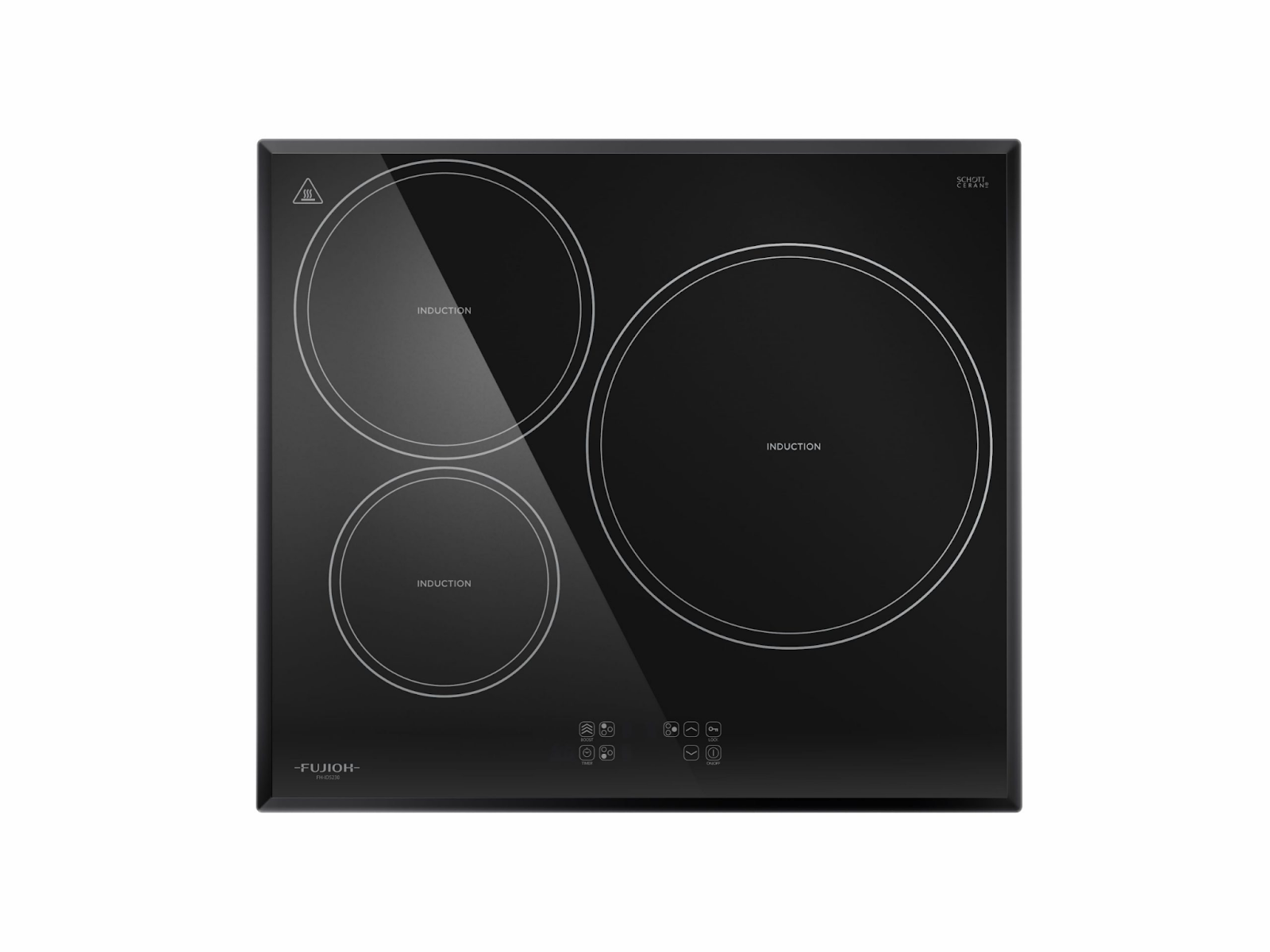
The FUJIOH FH-ID5230 is a built-in 3-zone induction hob designed for modern Malaysian kitchens. With three cooking zones in different sizes (160 mm, 210 mm and 290 mm), it accommodates a range of cookware, from small saucepans to larger stockpots and flat-bottomed induction-compatible woks. It also features 9 power settings, a Boost function for faster boiling, touch controls and a timer of up to 99 minutes.
Its Pan Sensor alerts users when incompatible cookware is detected, making it easier to identify whether a pot and pan is suitable for the hob. The Foreign Body Detection function adds another layer of safety by preventing the hob from switching on when items such as cutlery or clothing are left on a cooking zone..
The hob features a black SCHOTT CERAN® Ceramic Glass surface with a bevelled edge design. For added convenience and safety, it also comes with a Residual Heat Indicator to show when the cooking surface remains hot, Auto Switch Off and a Child Safety Lock to help prevent unintended operation.
When choosing an induction hob, consider not only its cooking features and safety function, but also whether your existing cookware is compatible with the appliance..
Induction cookers need compatible cookware because they use an electromagnetic field to generate heat directly in the pot or pan. Cookware with a suitable magnetic base is essential for the hob to detect it and heat it effectively.
Before replacing your pots and pans, check the induction symbol, try the magnet test and confirm the cookware’s suitability. Make sure the base is flat and meets your hob’s size requirements, and consider the types of dishes you prepare regularly, including whether you need an induction-compatible wok.
You may not need to replace all your cookware when switching to induction. Some of the pots you already own may work perfectly well.
Considering an induction cooker for your kitchen? Explore FUJIOH’s range of induction hobs and choose a model that suits your cooking needs and kitchen setup.
Q: Which cookware suits induction?
A: Cookware needs a suitable magnetic base to work on induction. Cast iron and induction-compatible stainless steel are common options. Some aluminium, copper, enamelled and non-stick cookware may also work if designed with a suitable magnetic base.
Q: How do I check whether my cookware is induction compatible?
A: Look for the induction symbol on the cookware or its packaging. You can also hold a magnet against the base. If it sticks firmly, the cookware is likely to be compatible, although checking the manufacturer’s information is still recommended.
Q: Can I use a traditional wok on an induction hob?
A: A traditional round-bottom wok is generally unsuitable for a flat induction cooking zone. Choose a flat-bottomed wok specifically designed for induction, and check that its base meets the hob’s size requirements.
Q: What happens if I use incompatible cookware on an induction hob?
A: The hob may not detect the cookware or begin heating. Cookware with weak magnetic properties or an unsuitable base may also perform poorly. Some induction hobs have a Pan Sensor that alerts users when cookware is incompatible. Check compatibility before purchase rather than relying on the hob to identify every unsuitable pan.
Q: Do I need to replace all my pots and pans when switching to induction?
A: Not necessarily. Some of your existing cookware may already have a suitable magnetic base. Check each pot or pan using the induction symbol, the magnet test and the manufacturer’s specifications before deciding which items need replacing.
