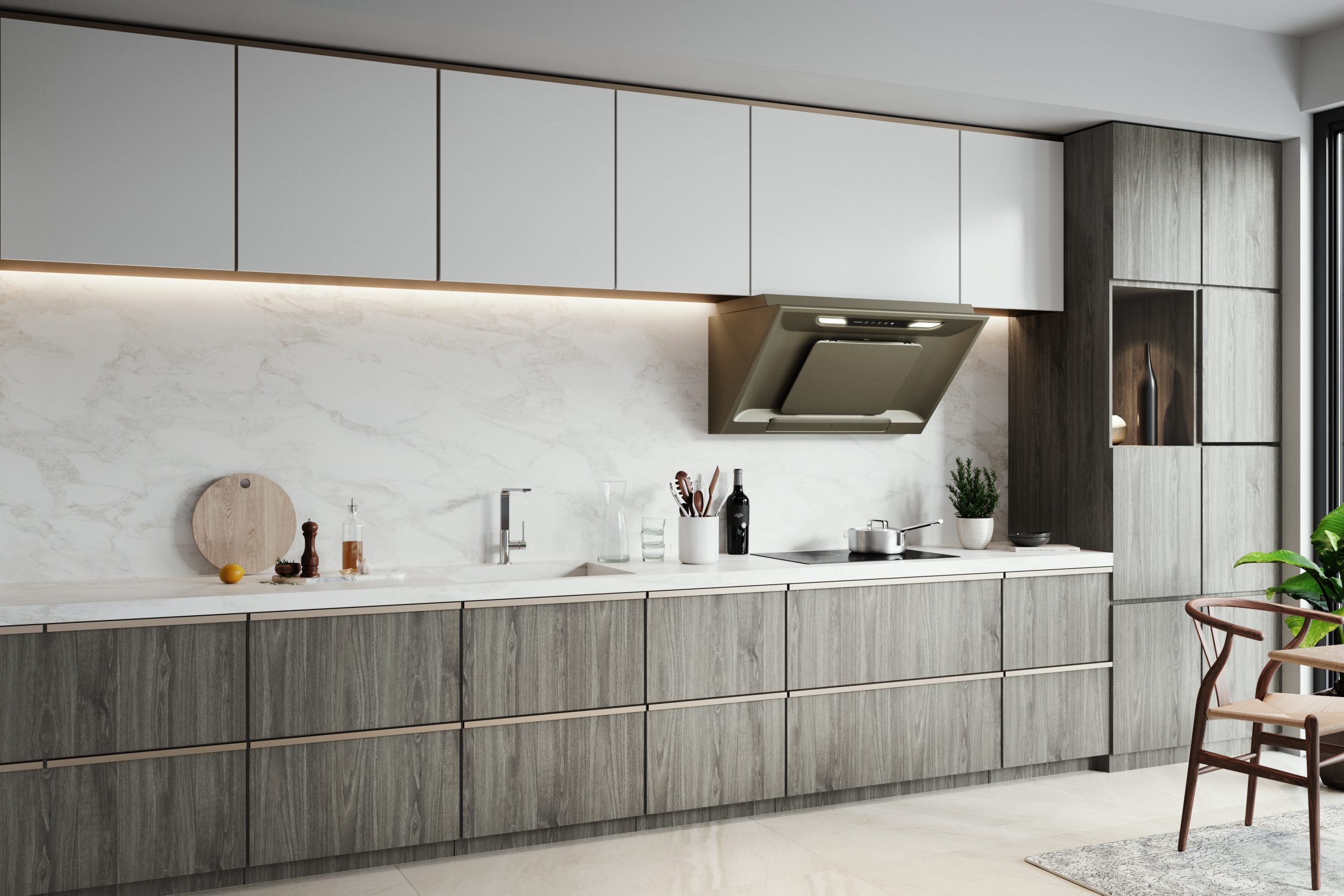
Featured Product: FR-SC2090 Inclined Design Cooker Hood
It’s a common belief among homeowners that to successfully maintain a clean, odour-free kitchen environment, you must maximise the raw cooker hood airflow rate. Many assume that the highest available CFM (cubic feet per minute) automatically guarantees the best capture of grease and fumes, especially after heavy frying or cooking strong-smelling dishes.
This approach, however, often leads to excessive energy consumption and unnecessary noise pollution.
The reality is that superior performance depends less on sheer power and more on precision engineering. By prioritising design and specs tailored to your specific kitchen size and cooking style, you can achieve cleaner air without the drawbacks of brute force suction.
Raw airflow capacity, which indicates the air flow rate for a kitchen hood, is measured in CFM. While higher CFM suggests faster ventilation, choosing too high a rate for your kitchen can cause issues that outweigh the benefits:
This is why we, at FUJIOH, challenge the common belief that increased energy consumption automatically leads to superior suction performance in cooker hoods. In reality, we leverage natural airflow laws by strategically narrowing the air channels where cooking fumes are drawn in. This allows us to increase the speed and efficiency of the suction while the motor uses significantly less power. Through this precise design, we realise energy-saving cooker hoods that consistently deliver the high performance necessary to keep your kitchen fresh, proving that clever engineering is the key to both efficiency and quiet operation.
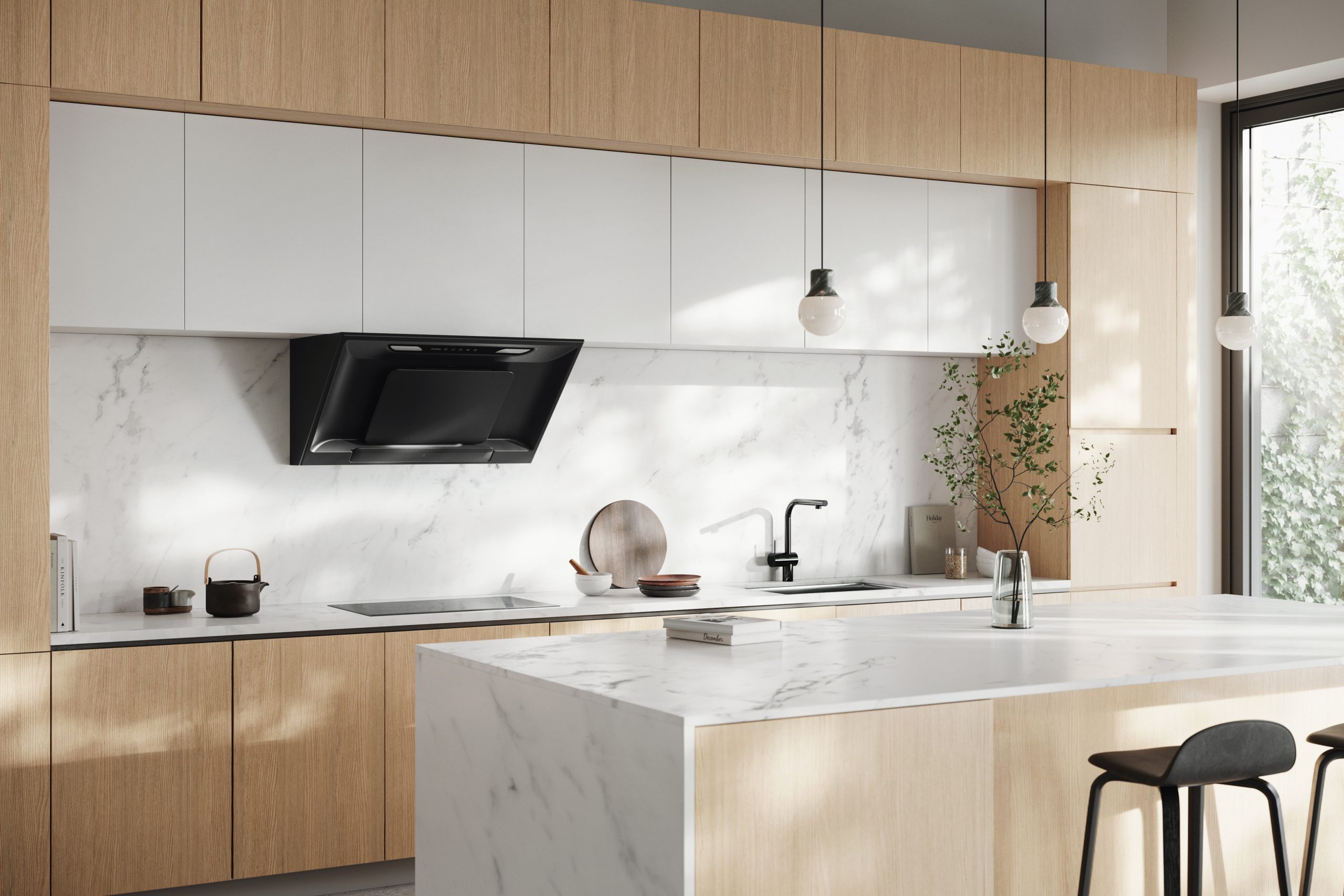
Featured Product: FR-SC2090 Inclined Design Cooker Hood
The rectifier panel is the physical embodiment of this smarter approach to air handling. The design employs a natural law, much like how narrowing the nozzle of a hose increases the speed of the water jet, to enhance performance.
By intentionally covering the main suction opening, the precisely shaped rectifier panel effectively narrows the suction area. This narrowing dramatically increases the speed at which the air and cooking fumes are drawn into the cooker hood.
This clever structure allows us to enhance overall suction performance while significantly lowering the motor’s required power input. For example, on models like our FR-SC2090 Inclined Design Cooker Hood, the suction opening is adjustable, giving you more control to enhance fume capture from the upper, left, and right sides of your cooking area.

Featured Product: FR-MS2370 R Super Slim Cooker Hood With Gesture Control
Our commitment to building efficient technology is backed by continuous, rigorous testing. We perform detailed smoke capturing tests on every single cooker hood model to confirm its suction performance is powerful enough for effective fume removal in your kitchen.
This commitment extends to the core technology: the optimal placement and shape of the rectifier panels are finalised only after a thorough flow path analysis is conducted. This extensive, repeated testing cycle ensures that every kitchen appliance we deliver offers consistent, high-quality performance you can rely on.
This focus on blending engineering with appearance is exactly what homeowners appreciate. As noted in a testimonial from Esther and Ryan, the main appeal of the rectifier panel design is that the filter is completely hidden. They were sold on the aesthetic benefit, emphasising that the hood looks very clean, and that the hidden structure successfully masks any internal grime. Beyond this clean look, they found the hydrophilic coating of the Aqua Slit Disk, Aqua Slit Filter and Oil Repellent Oil Tray to be highly effective, noting that even with oil buildup inside, it can be washed away very easily with just water.
The clever suction design that incorporates the rectifier panel offers a final, significant benefit that directly relates to comfort: reduced operational noise.
By enabling highly efficient fume capture using only the necessary minimum air volume, we avoid the disruptive operational noise caused by excessive airflow. This strategic approach to kitchen ventilation ensures that while the cooker hood is working hard, conversations in adjacent living and dining areas can be enjoyed without interference from its operation.
If you require more information on our types of kitchen hoods in Singapore or other kitchen appliances, feel free to get in touch with us at FUJIOH Singapore or email us at fit@fujioh.com.sg.
