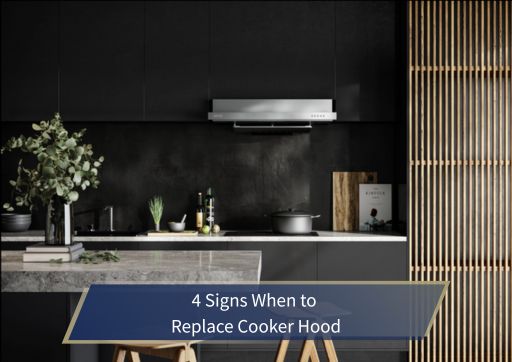
Does your cooker hood make odd noises or struggle to clear smoke while you cook?
If your kitchen still feels stuffy long after you turn off the stove, your cooker hood may no longer be working properly. Many people assume a cooker hood only helps with absorbing heat. In fact, it removes grease particles from the air and helps protect cabinets and walls from steam and oil damage.
A cooker hood can maintain peak performance for years with regular filter cleaning and grease removal. Over time, however, even the best kitchen appliances show signs of wear – motors weaken, internal parts slow, and overall efficiency can drop, making timely maintenance essential for a smooth cooking experience.
Knowing the signs that indicate it’s time to replace your range hood can help avoid poor air quality and unnecessary repair costs. The following are four signs that it may be time for a new range hood.
A cooker hood should draw smoke and steam upwards as soon as you start cooking. If steam spreads across the kitchen instead of being captured, it’s a sign that airflow has weakened. This can happen when the motor loses strength or when grease has built up on the filter and fan blades, slowing them down.
Cleaning the hood filters may help if dirt has accumulated on the surface, but it won’t restore a worn-out motor. If airflow remains weak after cleaning, replacement is often the more practical solution.
FUJIOH designs its models to prevent grease buildup before it becomes a problem. The FUJIOH FR-FS2290 RP/VP features Aqua Slit Filter, which captures oil and grease to minimize buildup on the fan. The filter is coated with a hydrophilic layer, allowing for easy cleaning with just water.
In addition, many models are also equipped with Super Kirei Fan, including FR-FD2490 V and FR-SC2090 V/R. This fan helps reduce oil and stain accumulation on the fan itself, making maintenance easier—an important feature for users to consider when choosing a cooker hood.
Choosing a cooker hood with these features ensures consistent airflow, easier maintenance and a more enjoyable cooking experience.
A cooker hood should not be loud enough to interrupt conversation. If it rattles, vibrates, or produces knocking sounds, it may indicate that internal parts are out of balance. Many older hoods use AC motors, which tend to become noisier over time. Prolonged vibration can also loosen screws and fittings, further affecting performance.
If noise has become a daily issue, it may be time to change the unit. Hood equipped with BLDC motors are quieter, more stable and energy-efficient. For example, FUJIOH FR-LT2490 V cooker hood features a BLDC motor that reduces noise level while using less electricity. With a quieter hood, you can cook without raising your voice or turning up the television.
Take a closer look under your cooker hood. If you see rust marks, peeling paint, or thick grease that no longer comes off, this is more than a cleaning issue. These visible signs often indicate ageing materials and surface damage. When grease settles into cracks or corroded areas, it increases fire risk and becomes harder to remove safely. Rust also weakens the structure of the hood and can affect electrical components, compromising safety and performance.
Cooker hoods with an oil-repellent exterior coating help prevent grease from sticking to the surface, reducing the chances of stains, corrosion, and long-term damage. By stopping oil from settling and hardening, this coating also lowers fire risk and makes regular cleaning more effective. When considering a replacement, choosing a model with oil-repellent paint—such as the FUJIOH FR-CL1890—can help maintain a cleaner surface, extend the hood’s lifespan, and support safer everyday cooking
Cooker hoods have evolved significantly, yet many older models still rely on outdated technology. Traditional hoods often use halogen bulbs that generate excess heat, consume more electricity, and require frequent replacement. They also lack sensors or smart intelligent smoke detectors meaning airflow must be adjusted manually. This can lead to inconsistent performance and higher energy usage over time.
Modern cooker hoods, however, are designed to be more efficient, quieter, and smarter. LED lighting now provides brighter, clearer illumination while using less power and lasting far longer than traditional bulbs.
Smart intelligent smoke detectors automatically adjust suction based on cooking activity, ensuring effective ventilation without unnecessary energy consumption. Beyond performance, a modern hood also enhances the overall look of the kitchen.
The FUJIOH FR-LT2490 V cooker hood reflects this shift towards smarter and more efficient design. Featuring LED lighting and smart intelligent smoke detector, It delivers powerful extraction while remaining energy-efficient and visually discreet. If your current hood feels bulky, dim, or inefficient, it may no longer meet the demands of today’s modern kitchens.
If your cooker hood is more than eight years old and requires motor repair, replacement is usually the more practical choice. Parts for older models can be costly, and labour costs continue to rise. In many cases, the total repair expenses come close to the price of a new unit.
Replacing an ageing hood with a model like the FUJIOH FR-CL1890 V/R helps manage grease more effectively and makes cleaning easier, both inside and out. It also features a cleaning reminder function – similar to a car’s service reminder, helps you maintain performance and hygiene over time. On top of that, FUJIOH cooker hoods come with a 10-year warranty, giving users peace of mind and long-term reliability.
Conclusion
A cooker hood plays an important role in keeping your kitchen air clear and reducing grease build-up. Weak suction, excessive noise, visible rust, or outdated features are clear signs that it may no longer be performing efficiently. Modern FUJIOH models equipped with BLDC motors or Heat Clean functions, like the FR-LW2490 V, operate quietly and perform better. If your current hood struggles with everyday cooking demands, replacing it may be the safer and more cost-effective long-term solution.
Q: How to replace a cooker hood in a Malaysian kitchen?
A: Start by measuring the existing cabinet opening or hood width, which is usually 60cm, 70cm, or 90cm. Next, confirm whether your setup is ducted or recirculating. Installation should be handled by a qualified technician to ensure secure mounting and a safe electrical connection.
Q: Can cleaning the filters improve suction power?
A: Cleaning the hood filter can help if airflow is restricted on the surface. However, it will not restore suction if the motor or fan is clogged internally or worn out.
Q: How do I choose the right cooker hood size for replacement?
A: The cooker hood should be at least the same width as the hob. For wider cooking zones or heavier cooking, a 90cm hood provides better coverage and more effective smoke extraction.
Q: Is it safe to keep using a hood with rust or heavy grease buildup?
A: No. Grease increases fire risk, while rust weakens the structure of the hood. Both issues can compromise electrical safety and reduce extraction performance.
Q: How long does a typical cooker hood last?
A: Most cooker hoods last between seven and ten years. Models equipped with BLDC motors and oil resistant coatings tend to last longer, as they reduce internal grease accumulation and wear.
Q: How to clean and maintain a cooker hood properly?
A: Wipe the exterior surfaces regularly and rinse the filters with water to prevent grease and dust buildup. For cooker hoods with self cleaning feature, run the cycle to clear grease automatically. Regular maintenance keeps your cooker hood long lasting.
Q: Why is my cooker hood dripping water?
A: Dripping usually occurs when steam condenses inside the hood. If the liquid is oily or discolored, it shows that the grease tray is full or that grease is no longer being managed effectively, which can affect overall performance.
